
ElevenLabs vs Descript: voice engine vs editing suite
ElevenLabs makes the best AI voice; Descript is the editor that even runs ElevenLabs inside it. Here's which you actually need, and when to use both.
Contents
ElevenLabs vs Descript: the verdict at a glance
Here is the twist most “X vs Y” posts miss: ElevenLabs and Descript barely compete, and Descript will happily run ElevenLabs inside itself. One is a voice engine, the other is an editor, and Google’s own AI Overview lands where I do, that most teams use both. I have run scripts through ElevenLabs for months and edited podcasts in Descript, and the choice is about which problem you have, not which tool is “better.”
People search “ElevenLabs vs Descript” because both clone voices and both touch audio, so they look like rivals on a feature checklist. Spend a day in each and the overlap shrinks to a sliver: voice cloning, where they aim at different jobs anyway. The rest of each tool is a different product entirely, which is why the right question is not “which wins” but “which problem am I solving today, and do I need the other one too.”
| If your problem is… | Pick |
|---|---|
| Making the best-sounding AI voice — narration, dubbing, cloning, agents | ElevenLabs |
| Editing a podcast or video without learning a timeline editor | Descript |
| Patching a flubbed word in your own recorded audio | Descript (Overdub) |
| Getting both, in one place | Descript with ElevenLabs’ models switched on |
ElevenLabs is the best AI voice tool when the voice is the deliverable. Descript is the better buy when the edit is the work. They are complements, not rivals, which is the most useful thing to know before you pay for either, and it is the reason a real recommendation here is less “pick one” and more “know which problem you are solving, and whether you will hit the other one next.”
The quick comparison
Scan this first; the sections below explain each call.
| Axis | ElevenLabs | Descript | Winner |
|---|---|---|---|
| Core purpose | AI voice engine (TTS, cloning, dubbing) | All-in-one audio/video editor | Different jobs |
| Voice realism | Industry-leading, expressive | Overdub good for short patches | ElevenLabs |
| Voice cloning | Instant + Professional (near-perfect) | Overdub, ~seconds, for fixes | ElevenLabs |
| Video editing | None | Full suite + screen recording | Descript |
| Text-based editing | No | Yes — cut by deleting transcript text | Descript |
| Transcription | Limited | Core strength, multi-speaker | Descript |
| Filler-word removal / studio sound | Voice isolator only | One-click, built in | Descript |
| Dubbing / languages | 29+ (70+ on V3), dubbing studio | Via embedded ElevenLabs | ElevenLabs |
| API / voice agents | First-class API + Flash | Not built for it | ElevenLabs |
| Long-form narration | Studio editor, strong | Not its job | ElevenLabs |
| They integrate? | Standalone | Runs ElevenLabs’ models inside | Descript (you get both) |
| Free tier | 10,000 credits (~10 min) | ~1 hour transcription | Split |
The pattern is clean: every voice row goes to ElevenLabs, every editing row goes to Descript, and the most interesting row is the one where Descript embeds its rival. That row is the whole strategy.
Notice there is no row where they fight to a draw on the same job. The only shared capability, voice cloning, splits on purpose rather than quality, because one clones to patch and the other clones to replace. So a head-to-head that would normally end in a points decision instead ends in a division of labor, which is the unusual and genuinely useful thing about this matchup.
ElevenLabs: strengths and gaps
ElevenLabs does one thing and does it better than anyone: it turns text into speech that does not announce itself as synthetic. Its full review is here; the short version is that the voices breathe and place emphasis on meaning.
Strengths:
- Voice realism is the category benchmark. A 4.5 out of 5 across more than a thousand G2 reviews, and the AI Overview calls it “the industry leader for creating highly realistic, expressive audio.” Here is a library voice on a neutral line at default settings:
- Cloning that holds up. Instant Voice Cloning copies a voice from a short sample; Professional cloning trains on 30+ minutes for a near-perfect replica. Here is my own voice, cloned and reading a line I never recorded:
- Dubbing and reach. 29+ languages (70+ on V3) plus a Dubbing Studio that re-voices a video into another language on a correction-friendly timeline, keeping the speaker’s character. This is a whole capability Descript does not have natively, which is part of why Descript leans on ElevenLabs for it.
- A real API and toolkit. Official Python and JavaScript SDKs and a low-latency model make it the default for apps and voice agents, and the same login adds sound effects, a voice isolator, and a speech-to-speech changer. An editor like Descript does not attempt any of this.
Gaps:
- It is not an editor. No video editing, no transcript-based cutting, no screen recording, no filler-word removal. If your job is assembling a finished episode, ElevenLabs is one ingredient, not the kitchen, and you will be exporting its output into a tool like Descript anyway. Treat it as a voice supplier, not a production hub, and it stays in its lane.
- Credit pricing bites heavy use. Every regeneration is billed and the headline minutes assume you nail each take, so a 10-minute script re-rolled a few times burns closer to 50 minutes of allowance. Unused credits also vanish on cancellation, which is the top complaint behind its 3.2 on Trustpilot.
Descript: strengths and gaps
Descript is the tool that made me stop dragging clips around a timeline. You edit audio and video by editing the transcript: delete a sentence of text, and the matching audio and video disappear with it. Its full review is here; the verdict there was that the editing is magic and the pricing is the weak spot.
Strengths:
- Edit by deleting text. Transcribe, then cut the recording by cutting words. For podcasters and YouTubers who never wanted to learn Premiere, this is the whole reason to be here.
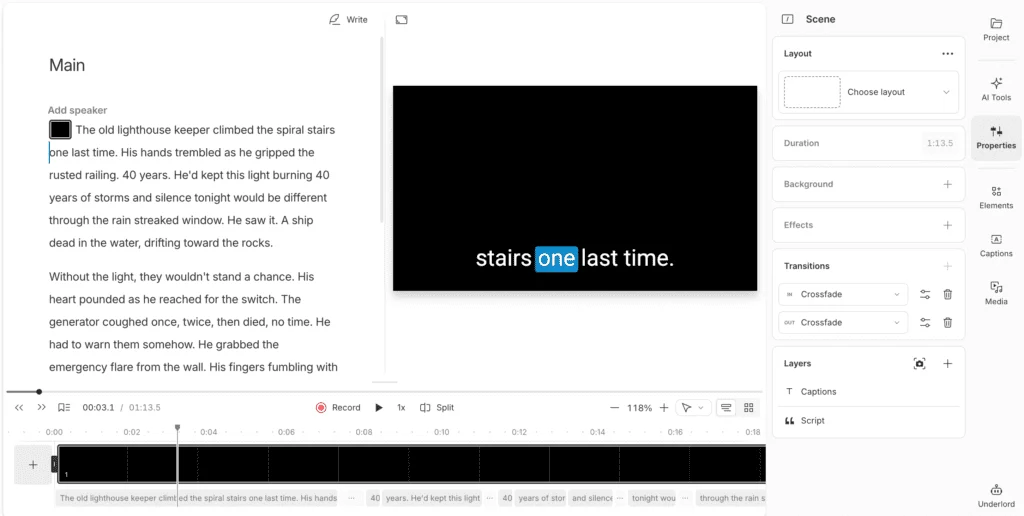
- A genuine production suite. Multi-speaker transcription, one-click Studio Sound cleanup, automatic filler-word (“um”, “uh”) removal, screen recording, multitrack editing, and full video export under one app. Matching that elsewhere means three or four separate tools, and Descript’s whole pitch is that you stop tab-hopping between them.
- Overdub for quick fixes. Clone your voice in seconds and type a correction to patch a flubbed word, with no re-recording. It is the feature that saves a take when you misspeak one name in an otherwise clean recording, and used that way it is a real time-saver.
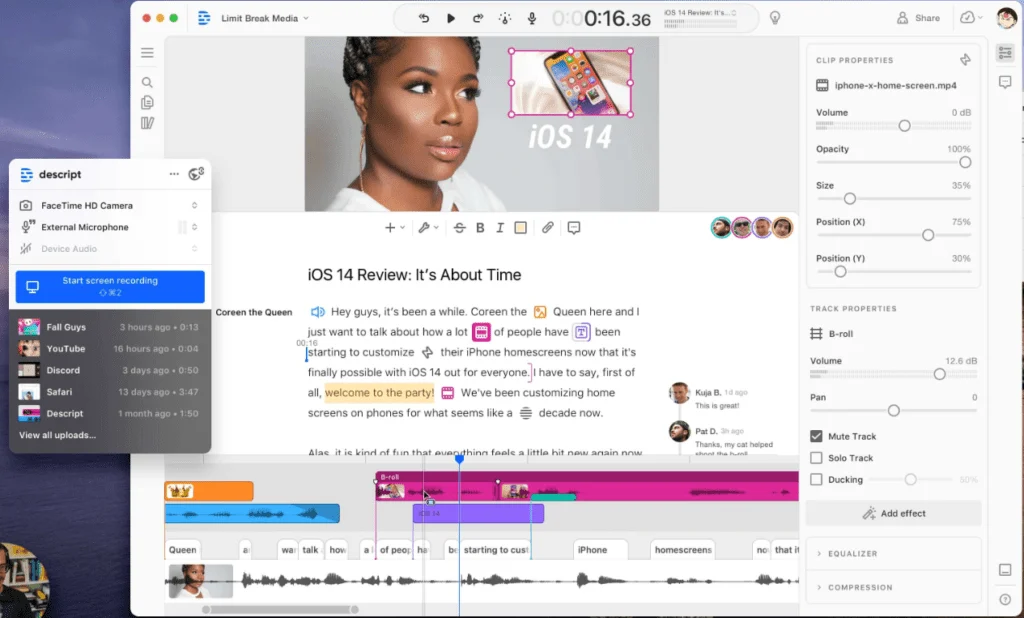
- It embeds ElevenLabs. Descript natively supports ElevenLabs’ Multilingual v2 and V3 models in App Settings, so the editor’s biggest weakness (voice quality) is solved by switching on its rival from the settings panel.
Gaps:
- Overdub is not studio-grade voice. It is built to patch words, not narrate chapters; community testers note it “can sound slightly robotic for longer generations,” and one podcaster’s blunt verdict on a cloned clip was “who are we kidding, this isn’t fooling anyone.”
- The pricing is the sore point. Credits and media-hour caps make the real cost of heavy editing climb, which is exactly the critique our Descript review led with, and the title of that review (“the editing is magic, the pricing isn’t”) is the one-line summary.
- It depends on the cloud. Descript is a heavier, project-based app than a quick voice generator, so large video projects can feel sluggish and you are tied to its ecosystem in a way you are not when you simply export a voice file from ElevenLabs.
How they differ on price
Both tools are cheap to start and metered on completely different things, so “which is cheaper” depends on what you are buying.
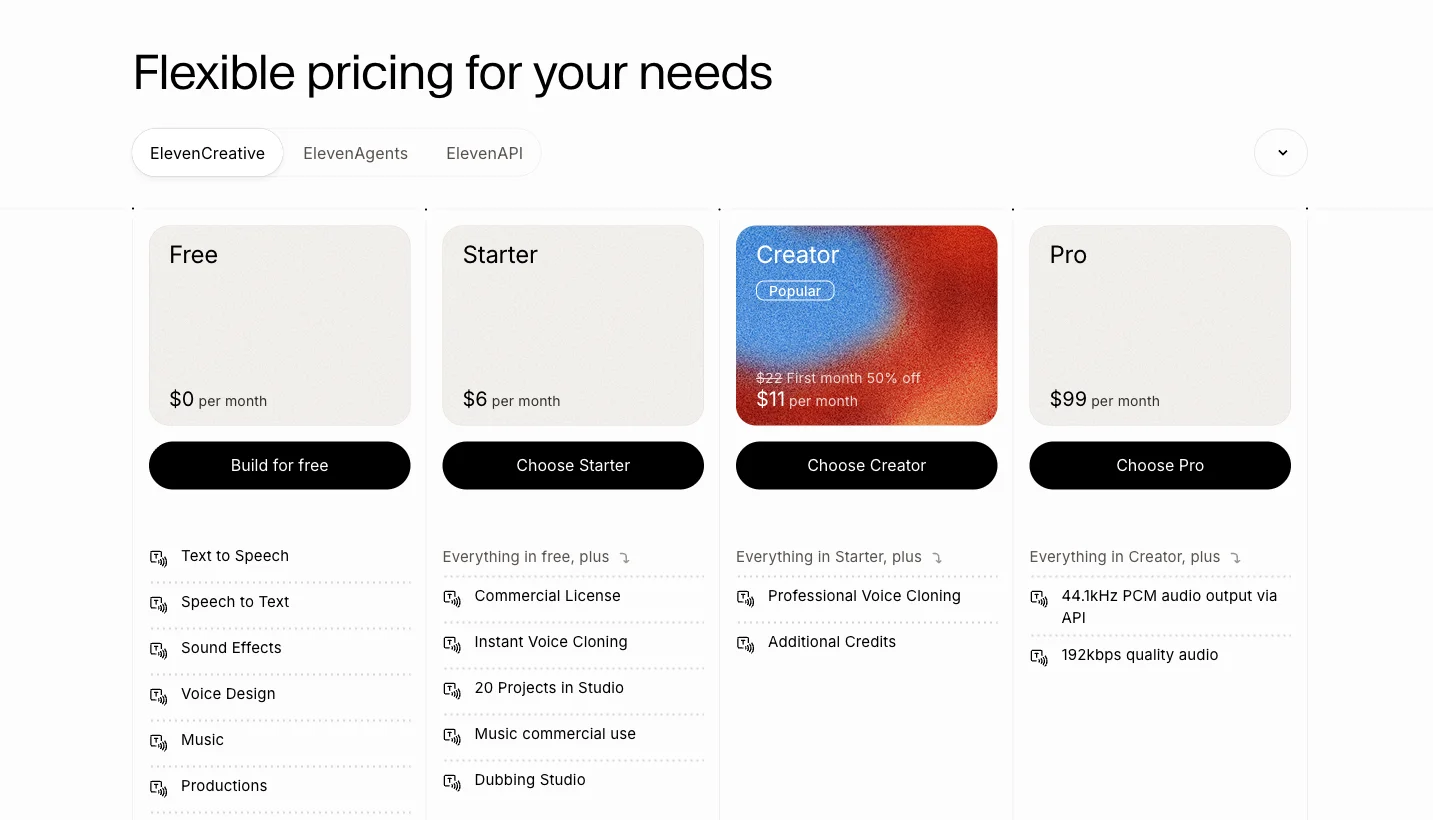
ElevenLabs meters voice. Free gives 10,000 credits (~10 minutes, no commercial license); Starter is $6 (30,000 credits), Creator $22 (121,000 and Professional cloning), Pro $99 (600,000). The catch is that every regeneration is billed, so the realistic minutes run below the headline.
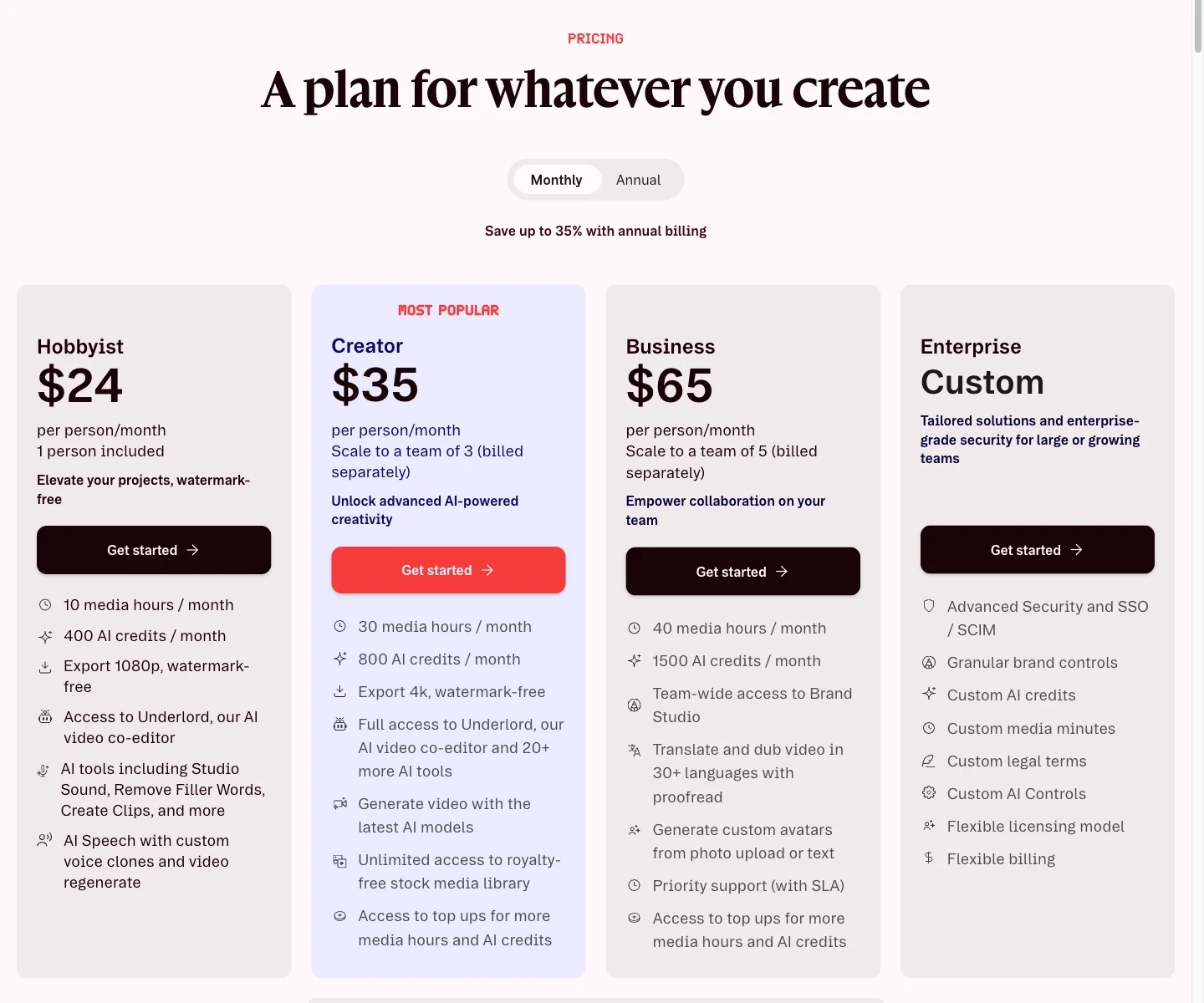
Descript meters editing. Free gives ~1 hour of media and 100 one-time AI credits; Hobbyist is $24/mo (10 hours, 400 credits), Creator $35/mo (30 hours, 800 credits, the tier most solo creators land on), and Business $65/mo per seat. You are paying for transcription hours and editor seats, not voice characters.
Two caps decide whether Descript feels cheap or pinched. The media-hours limit is the one heavy editors hit first: a video team uploading raw footage burns hours fast, and overage pushes you up a tier. The AI-credits limit governs the generative features (Overdub, Underlord actions, AI green-screen), so leaning on those drains a separate meter. For a creator editing a couple of hours a week the Creator plan is comfortable; for a daily video shop it climbs, which is the “pricing isn’t magic” caveat our standalone Descript review opened with.
So the comparison is apples to oranges by design. A creator who just needs voiceover pays ElevenLabs by the minute and never touches Descript’s $35. A podcaster who edits two hours a week pays Descript for the editor and never needs ElevenLabs’ Pro tier. The free tiers reflect the same split: ElevenLabs’ 10,000 credits is an audio audition, Descript’s hour of transcription is an editing trial, and fahimai’s side-by-side put it simply, “test both before paying a cent.”
A worked example shows how rarely they overlap on the invoice. A solo podcaster editing a weekly hour-long episode lives on Descript’s $35 Creator tier (30 media hours covers four episodes with room to spare) and may never spend a cent on voice generation, because the show is their real voice. A narrator producing AI voiceover for clients lives on ElevenLabs’ $22 Creator tier and never needs Descript’s editor, because the deliverable is a clean voice track, not a cut episode. Same two price lists, and most buyers only ever touch one of them.
The interesting cost question is the overlap case: you want Descript’s editor and ElevenLabs’ voice. Running ElevenLabs through Descript still consumes ElevenLabs generation (Descript routes to those models), so you are effectively paying for the editor seat plus the voice you generate, not getting ElevenLabs quality for free. It is convenience, not a discount, and worth knowing before you assume the embedded option replaces an ElevenLabs plan.
The honest read on value: neither is overpriced for its job, but both can feel expensive when you stretch them past it. Editing long-form on ElevenLabs is impossible, and generating long-form narration on Descript’s Overdub is a false economy. Pay each for what it is good at and the bills stay sane.
How they differ on voice quality
This is the most lopsided axis in the comparison, and it is the one ElevenLabs exists to win.
ElevenLabs is, in the AI Overview’s words, “the industry leader for creating highly realistic, expressive audio,” handling emotion, pacing, and inflection in a way that survives a long listen. The two clips above are the bar: a default library voice and a clone of my own voice, neither of which telegraphs “AI” in the first sentence. For narration, audiobooks, character work, and dubbing, this is the difference between shippable and not.
The quality also holds across the catalog rather than living in two or three hero voices, and it stays consistent on the first take instead of needing a lucky re-roll. Here is a different voice and register to show the range is real, not cherry-picked:
That consistency is what makes ElevenLabs viable for long-form, where a single off line in an hour of audio is the thing a listener remembers.
Descript’s Overdub plays a different game. It clones your voice in seconds and is engineered to patch a flubbed word or splice a short correction into audio you already recorded. Inside that narrow job it is genuinely useful. Pushed outside it, the seams show: the same AI Overview notes Overdub “can sound slightly robotic for longer generations,” and a podcaster testing it for production wrote that a cloned clip, while quick and easy, “isn’t fooling anyone.” A community thread on r/ElevenLabs comparing the two reaches the same split, with users keeping Descript for editing and reaching for ElevenLabs when the voice itself has to carry.
Voice cloning is where the gap is most concrete, and it is the comparison most people actually search for. The two tools clone for different reasons. Descript’s Overdub is a patch tool: it learns your voice fast (clones in seconds) so you can fix a misspoken word in a recording that is otherwise you. ElevenLabs clones to replace a recording session: Instant cloning copies a voice from a short sample, and Professional cloning trains on 30+ minutes of audio for a near-perfect replica that can read a script you never recorded. One is a spell-checker for audio; the other is a synthetic narrator.
That difference in purpose is why the quality verdicts split so cleanly. For a one-word fix in your own voice, Overdub is the faster, simpler tool and the result is fine because nobody hears a single patched word as “AI.” For generating minutes of fresh narration, Overdub’s seams show and ElevenLabs’ Professional clone is the one that survives the listen. The clip of my own ElevenLabs clone above is the bar Overdub is measured against, and the community consensus, that Overdub is great for fixes and ElevenLabs is the choice when the voice has to carry, matches what I hear.
Here is the resolution Descript itself ships: rather than ask Overdub to do ElevenLabs’ job, Descript lets you generate text-to-speech using ElevenLabs’ actual Multilingual v2 and V3 models from inside the editor. So the real answer to “whose voice is better” is “ElevenLabs’, and Descript agrees enough to embed it.” If voice quality is your deciding factor, you are choosing ElevenLabs whether you run it standalone or through Descript’s settings panel.
How they differ on workflow
Workflow is where Descript turns the tables, because here the comparison is editor versus ingredient.
Descript is built for the person assembling a finished piece. You record or import, get a transcript, and then edit the media by editing words, delete “um” across the whole project in one click, run Studio Sound to clean up a bad mic, drop in a screen recording, and cut the video on the same transcript. None of that exists in ElevenLabs, because ElevenLabs is not trying to be an editor. For a podcaster or YouTuber, Descript collapses a multi-tool workflow into one window.
The transcription underneath it all is the part that makes the rest work. It is accurate enough to edit from, handles multiple speakers, and doubles as your captions and show notes, so the same pass that cuts the episode also produces the text assets around it. Its Underlord AI layer adds the automation on top, drafting clips, removing retakes, and suggesting edits, which is the kind of “do the boring part” help a voice engine has no reason to offer.
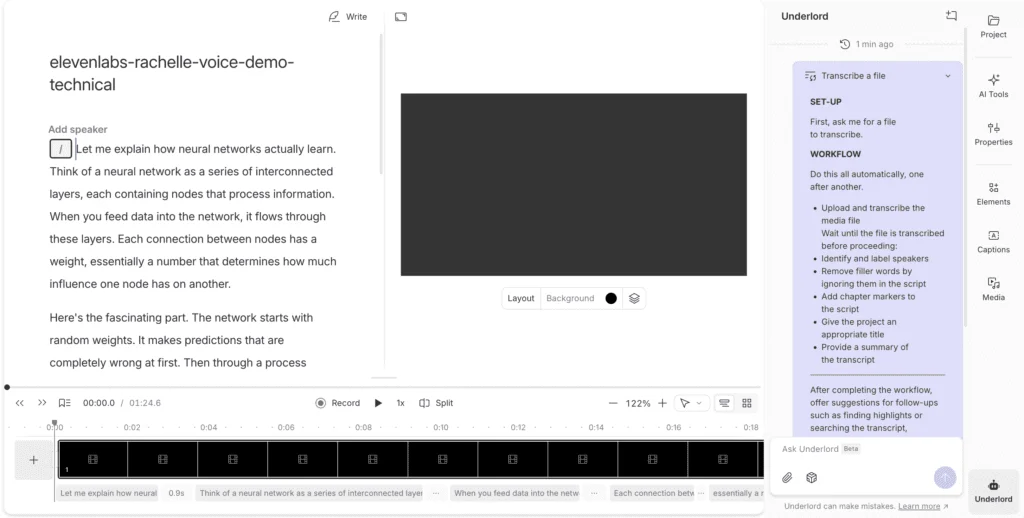
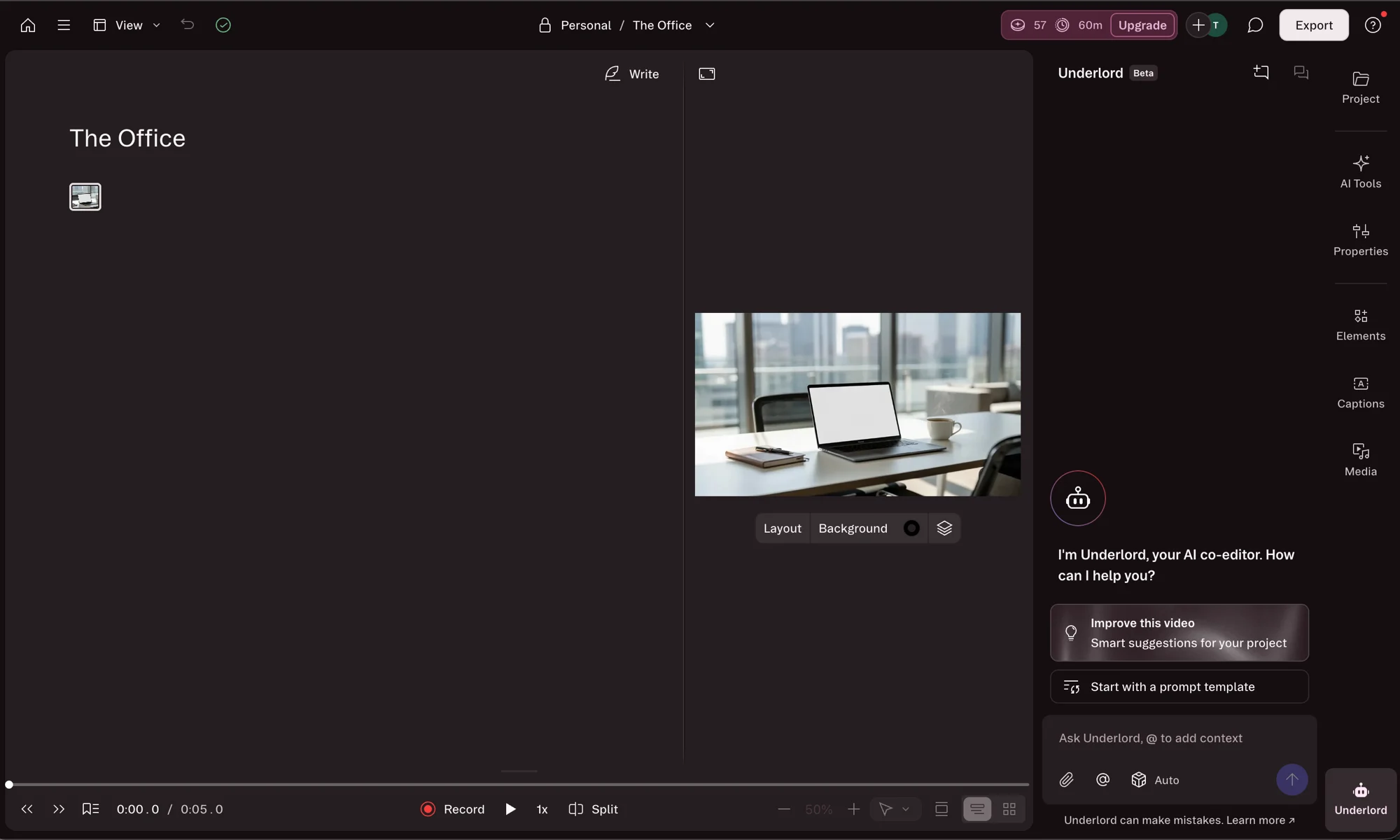
It goes wider than audio, too. Descript records your screen, edits the resulting video on the same transcript, and exports a finished clip, so a software tutorial or a talking-head explainer is start-to-finish in one app. A voice engine has no answer to “I need to record my screen and cut the result,” because that was never the job it set out to do.
ElevenLabs’ “workflow” is generation, and it is excellent at that narrow thing. The Studio editor splits a long script into regenerable blocks so a fluffed line is a re-roll, not a re-record, and the API drives the same voices in apps and agents. But you do not edit a podcast in ElevenLabs; you generate audio and take it elsewhere, often into an editor like Descript.
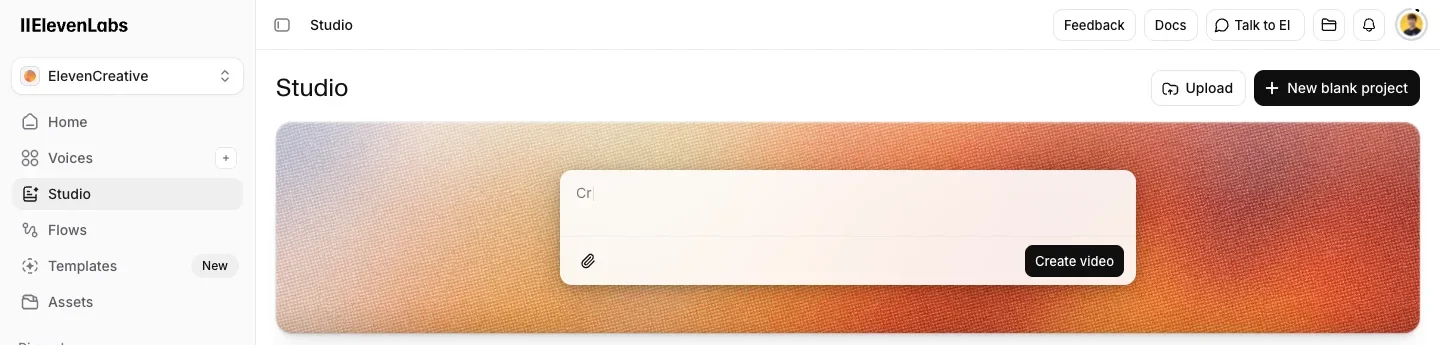
Which is why the smartest workflow uses both. Edit your episode in Descript, and when you need a voiceover, a dub, or a clean synthetic narrator, generate it with ElevenLabs, either by exporting from ElevenLabs or by switching its models on inside Descript. The “versus” framing falls apart the moment you build something real: the editor and the voice engine sit next to each other on the same desk.
There are two ways to run that pairing. The lighter one keeps both tabs open: draft and generate voice in ElevenLabs for maximum control over stability and emotion, export the audio, and assemble the final piece in Descript with your recorded segments. The tighter one stays in Descript: enable ElevenLabs’ models in settings and generate voice without leaving the editor, trading a little fine control for a single window.
For a polished audiobook or a multi-language dub I reach for the first, because the standalone ElevenLabs controls matter. For a podcast that needs one synthetic intro line, the second is faster. Either way the takeaway is the same: the tools stack rather than cancel, and “which should I buy” quietly becomes “which do I open first.”
Who should pick ElevenLabs
- Voiceover artists, narrators, and audiobook makers who need the voice to carry hours of listening. The realism and Professional cloning are the reason to be here, the Studio editor handles long scripts block by block, and nothing in Descript’s Overdub comes close on a chapter-length read.
- Dubbing and multilingual creators turning one recording into many languages on the Dubbing Studio timeline, then correcting transcript and timing before export. The 70+ language reach on V3 has no equivalent in an editor. Start free to hear the quality first.
- Developers building voice agents or apps who need an API, official SDKs, a low-latency model, and programmatic generation. This is a category Descript does not serve at all.
- Anyone whose deliverable is the audio itself rather than an edited episode. If you are handing over a finished voice track for someone else to drop into their project, buy the best voice and skip the editor.
Who should pick Descript
- Podcasters and YouTubers who record real audio and video and need to edit it fast, without learning a timeline tool. Edit-by-text plus one-click filler-word removal and Studio Sound is the core win, and it turns an afternoon of editing into an hour.
- Course creators and teams making screen-recorded tutorials and corporate content, where transcription, captions, screen recording, and one-app video editing matter far more than a synthetic narrator. The collaboration and shared-project features fit a team better than a voice tool does.
- Creators who want to patch their own recordings. Overdub fixing a flubbed word in your real voice, without re-recording the line, is exactly and only what it is for, and it is genuinely good inside that lane.
- Anyone who wants ElevenLabs quality without a second tab. Pick Descript, switch on its embedded ElevenLabs models in settings, and you get the editor plus the voice engine in one window, which is the best of both for most solo creators.
The final word
The “ElevenLabs vs Descript” question dissolves once you say what each tool is: ElevenLabs is the best AI voice you can buy, and Descript is the best text-based editor you can buy. They aim at different parts of the same project, which is why the AI Overview, the community threads, and my own use all land on “most people who need both use both.”
So choose by your bottleneck. If the voice is the work, buy ElevenLabs and, if you also edit, run it inside Descript. If the edit is the work, buy Descript and lean on its embedded ElevenLabs models when Overdub is not enough. The only wrong move is asking one to do the other’s job: editing long-form on a voice engine, or narrating an audiobook through a patch-the-flub clone.
Not sure which is your bottleneck? Look at your last project and ask what ate the time. If it was cutting and cleaning, Descript pays for itself the first week; if it was getting a voice that sounds right, ElevenLabs is the spend that moves the needle. Both free tiers exist for exactly this trial. Match the tool to the bottleneck and both earn their price. Start with ElevenLabs free to hear the voice, and read our Descript review if the editor is what you actually need. If your bottleneck is narration quality specifically, our best AI voice for audiobooks roundup tests the long-form end.
Frequently asked questions
Is Descript or ElevenLabs better?
They do different jobs. Descript is an all-in-one audio and video editor, best for cutting podcasts and videos by editing text. ElevenLabs is a dedicated AI voice engine, best for high-quality voiceovers, cloning, and dubbing.
Most creators who need both end up using both.
Can you use ElevenLabs inside Descript?
Yes. Descript natively supports ElevenLabs' AI speech models (Multilingual v2 and the newer V3) in App Settings > AI models, so you can generate ElevenLabs-quality voice without leaving the Descript editor.
Is Descript's Overdub as good as ElevenLabs?
No. Descript's Overdub clones your voice in seconds and is built to patch flubbed words, but it can sound slightly robotic over longer generations. ElevenLabs leads clearly on long-form realism and emotional range.
Which is cheaper, ElevenLabs or Descript?
Both have a free tier (Descript gives ~1 hour of transcription; ElevenLabs gives 10,000 credits). Paid plans start at $6 on ElevenLabs and $24 on Descript, but they meter different things, voice credits versus an editor seat, so the right one depends on the job.
Do I need both ElevenLabs and Descript?
Many creators do. The common workflow is to record and edit in Descript, then generate or dub the voice in ElevenLabs, often using ElevenLabs' models from inside Descript itself. They complement each other more than they compete.
Keep reading
ElevenLabs vs Cartesia: creator quality vs agent speed
ElevenLabs owns voice quality and catalog; Cartesia owns sub-100ms speed. I tested both, including cloning my own voice in each. Here's which AI voice wins.
ElevenLabs vs Murf: the cheaper one is your script
Murf bills by audio duration, ElevenLabs by characters, so the cheaper voice tool depends on your script's pace, not the price page. I ran the numbers.
ElevenLabs pricing: what the credits really cost
ElevenLabs starts free and most creators pay $22/month — but credits burn faster than the headline minutes. Here's what every plan actually costs.
ElevenLabs review: the best AI voice, billed by the credit
I ran my own scripts through ElevenLabs: the voices are a clear class above everything else, but the credit pricing punishes heavy use. Here's the verdict.