Otter.ai alternatives: 6 better notetakers, tested
We tested the top Otter.ai alternatives. Whether you're leaving over the price, the consent lawsuit, or the meeting bot, here's the notetaker that fixes it.
Otter.ai is a capable notetaker, but it is also the one people most often go looking to replace. The free plan is tight, a 2025 consent lawsuit hangs over it, and the features that matter most sit behind its priciest tier. Search “Otter alternatives” and you get listicles ranking twenty tools the writer never opened, which is no help when you have one specific reason for leaving and need the one tool that fixes it.
We took a different route. We had just run the same controlled meeting through Otter and its two leading rivals, and written full reviews of each, so instead of listing tools at random we can tell you which alternative actually solves the thing pushing you off Otter, whether that is the price, the bot, the privacy, or the missing video.
The best Otter.ai alternatives at a glance
We tested the top three head-to-head and surveyed the rest of the field. Here is where they land:
- Best overall, and best free: Fathom — an unlimited free plan, it records video, and it wrote the cleanest summary in our test. 4.6 / 5.
- Best bot-free, for client calls: Granola — nothing joins the call, and it turns your rough notes into a full summary. 4.6 / 5.
- Best for large teams: Fireflies — team-wide search across hundreds of calls, plus deep CRM and Slack integrations.
- Best free for Zoom, Meet, and Teams: tl;dv — unlimited free recordings and shareable highlight clips.
- Best for languages and transcription: Notta — strong multilingual accuracy and file imports.
- Best for sales and revenue teams: Avoma — conversation analytics, scorecards, and pipeline insight.
If you just want the short version: leaving over the free limits or wanting video? Start with Fathom. Leaving because a bot in the call is awkward? Granola. A big team drowning in calls? Fireflies.
Why people leave Otter.ai
Most “best alternatives” lists skip the obvious first question: what is actually wrong with the tool you are leaving? Otter is not a bad product, and we said so in our full Otter.ai review. But it has four specific weak spots, and naming them is the fastest way to find the right replacement, because each one points at a different alternative.
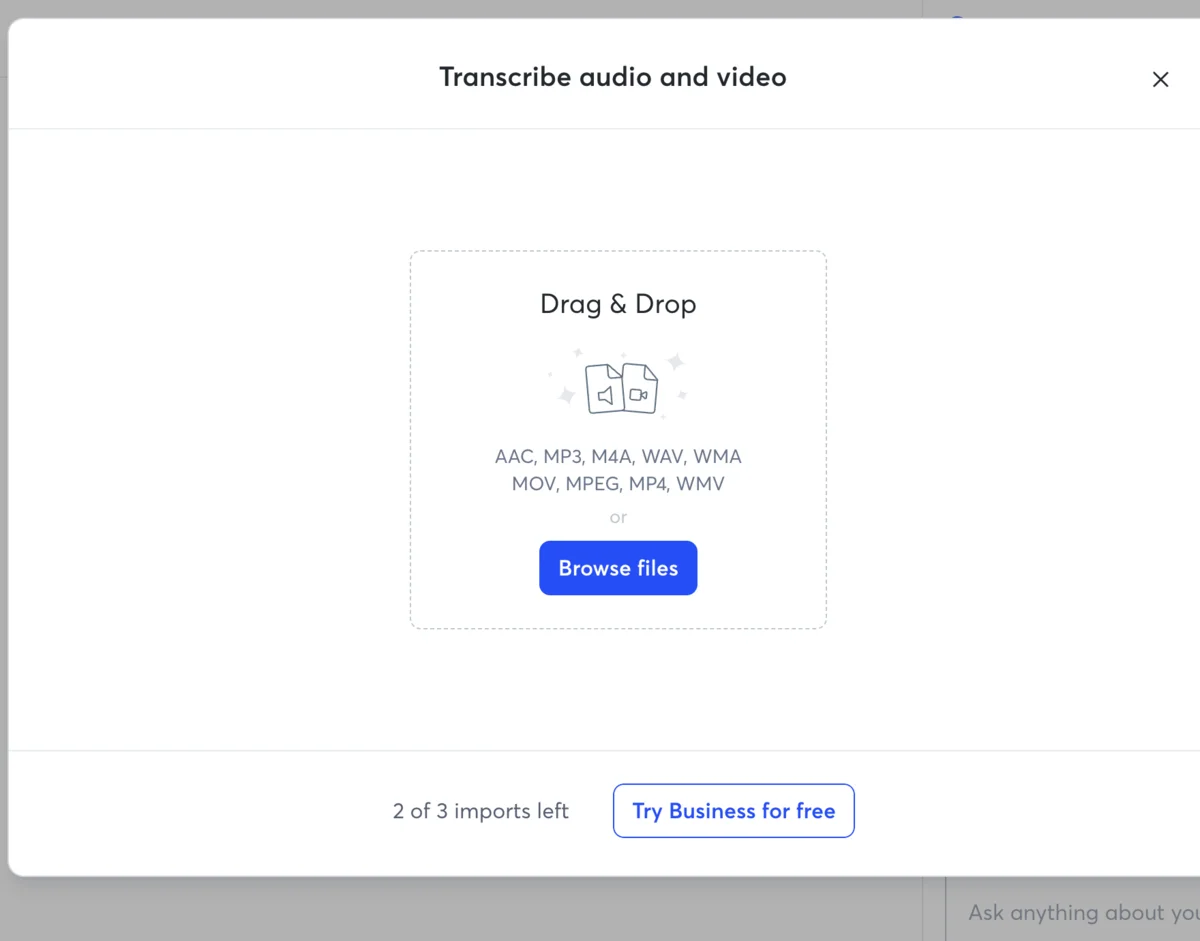
The free plan is a trial, not a home. Otter’s free tier gives you 300 minutes a month, caps each conversation at 30 minutes, and allows only three file imports for the lifetime of the account. For anyone with more than a couple of short meetings a week, you hit the wall fast and the upgrade prompt follows. Several rivals give you more for nothing.
Privacy is a live question. A 2025 class-action, Brewer v. Otter.ai, challenges how the service records people on calls, and Otter trains its AI on your conversations by default unless you dig into settings and opt out. For client work, legal teams, or anyone in a two-party-consent state, that is a real consideration, not a hypothetical one. Its Trustpilot score sits at 3.0, lower than the tools people switch to.
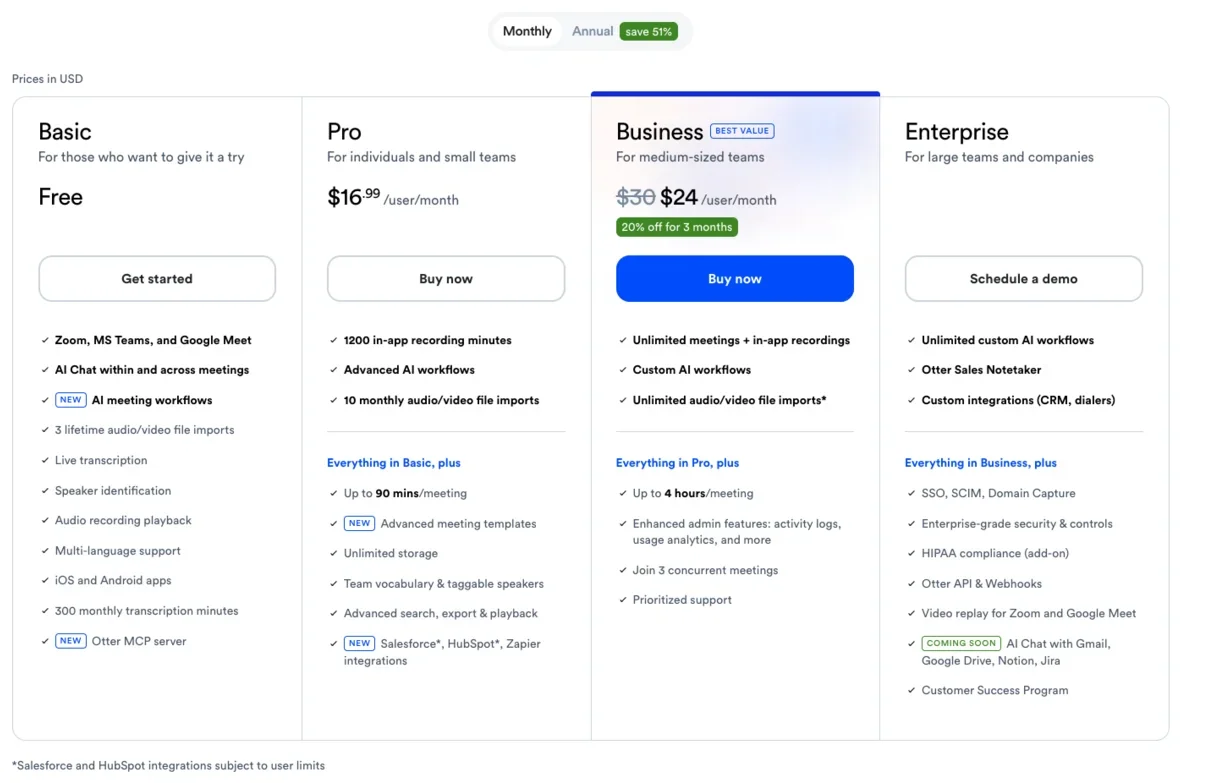
The price-to-feature math frustrates people. Video replay of a call and unlimited transcription both live on the $30-a-user Business plan. Pro, at $16.99 a month, mostly just lifts the free tier’s minute caps. When a free rival includes video and unlimited recording, paying $30 to match it is a hard sell.
A bot you may not want. OtterPilot auto-joins your calendar’s meetings as a visible notetaker. That is convenient for internal standups and genuinely useful for hands-off capture, but on a client or sales call a third participant labeled as a bot can be awkward or simply not allowed. The fix here is a bot-free tool, and that points straight at Granola.
The accuracy is good, not flawless. In our controlled test Otter’s transcript dropped the quarter off “Q3,” turning a specific figure into a vaguer one, and its AI Chat, the feature that makes the archive searchable, is metered at 20 questions a month on the free plan and 50 on Pro. The core transcription is solid, but a rival like Fathom kept more of the hard specifics intact, and small slips add up across a week of meetings when those notes are the record you act on.
None of this makes Otter worthless. If you need live transcription with speaker labels and a strong mobile app, it is still a good pick, and we rated it 3.8 out of 5. But if one of those four things is why you are here, there is an alternative that solves it directly.
What to look for when you switch
Otter has trained you to expect certain things from a notetaker, and the alternatives differ on exactly the axes that matter most when you move. Weigh these before you commit your meetings to a new tool, because the right pick depends on which of them you care about.
How real the free plan is. This is the single biggest variable, and it is where the alternatives separate most. Otter’s free tier caps you at 300 minutes a month; Fathom’s free plan has no minute cap at all; tl;dv’s is unlimited too; and Granola’s free Basic plan is unlimited to record but hides your older history. Read the actual limits, not the word “free,” because that is what you will live on.
Whether a bot joins the call. Most notetakers, Otter included, send a visible bot or auto-join your calendar. On internal standups that is fine, but on a client or sales call a third participant labeled as a recorder can be awkward or against policy. If that is why you are leaving, a bot-free tool like Granola is the only real fix, since it captures device audio with nothing in the participant list.
Summary quality, not just a transcript. Any of these tools can produce a transcript. The value is in the summary: does it separate decisions from discussion, pull clean action items, and get the numbers right? In our testing this was the biggest difference between a tool that saved time and one that handed back a wall of text you still had to read.
Accuracy on the hard specifics. Clean two-person audio is easy; real meetings have crosstalk, accents, and jargon. Names, figures, and ticket IDs are exactly what you will quote later, so accuracy on specifics matters more than a headline percentage. This is where Fathom edged ahead and Otter slipped in our test.
| What to weigh when you switch | Why it decides the pick |
|---|---|
| Free-plan reality | What you will actually live on — Fathom and tl;dv are unlimited, Otter caps at 300 min |
| Bot vs bot-free | A visible bot is awkward on client calls; only Granola (and Fathom’s beta) removes it |
| Summary quality | A clean recap beats a raw transcript you still have to read |
| Accuracy on specifics | Names and numbers are what you quote later |
| Languages | Multilingual teams need Notta-grade breadth |
| Privacy and training | Default opt-in vs delete-audio matters for client work |
| Where notes land | Slack and CRM sync are the whole point of Fireflies and Fathom |
Languages. If your meetings are not all in English, multilingual accuracy becomes the deciding factor, and it is where a transcription-first tool like Notta outclasses the meeting-assistant workflow that Fathom and Granola optimize for.
Privacy and where your data goes. Check whether the tool trains its AI on your conversations by default, whether it deletes the audio after transcribing, and whether it carries the compliance your work needs. Otter’s default opt-in to training is a common reason people leave; Granola’s delete-audio, opt-out model is the calmest in the group.
Where the notes end up. A summary trapped in one app is half as useful. The best alternatives push notes into Slack, a CRM, or Notion automatically, which is the whole point of Fireflies for a big team and Fathom’s CRM sync for a sales one.
How we picked
This is not a list scraped from vendor pages. We wrote full, hands-on reviews of the three leading notetakers and ran one controlled test through all of them: an 80-second, two-speaker product meeting we generated with synthetic voices, loaded with names, numbers, and jargon, so we knew the exact right answer in advance. Otter took it as a file import, Granola captured it as a quick note, and Fathom recorded it bot-free, all in June 2026.
That shared test is what lets us rank the top three honestly. Fathom’s transcript was the most accurate, keeping “Q3”, “$16 to $19”, and “tag it P1” intact; Otter dropped the quarter off “Q3”; and Granola garbled a line but made up for it by merging our typed notes with the audio into the most complete write-up. For the wider field, the tools we have not run end to end, we lean on the vendors’ own pricing and documentation, public ratings, and our broader testing across the category, and we say so rather than implying we tested everything.
Read the full test-meeting script we scored against
These are the exact words in the clip above. The synthetic voices are Sarah (ElevenLabs’ Rachel) and David (Adam), and we scored each tool’s transcript and summary against this ground truth.
Sarah: Morning, David. Before we start, did the Q3 churn numbers come in?
David: They did. We closed at 5.2% monthly churn, down from 6.8% in Q2. The retention experiment on the onboarding flow is doing the work.
Sarah: That’s a big drop. Which cohort moved the most?
David: The self-serve cohort. Activation went from 41% to 58% after we added the interactive checklist. Enterprise barely moved.
Sarah: So the action item is to port that checklist into the enterprise onboarding before the November release. Can you own that?
David: I can. I’ll loop in Priya from design and scope it by Friday. One risk: the enterprise SSO step breaks the checklist’s deep links right now.
Sarah: Note that as a blocker. Let’s also get the API latency under 200 milliseconds before we ship. Marcus flagged P95 spikes on the EU region.
David: Agreed. I’ll file a ticket for the latency and tag it P1. Anything else for the roadmap review?
Sarah: Just the pricing test. We’re moving the Pro tier from $16 to $19 and watching conversion for two weeks. Decision on the 24th.
David: Got it. I’ll have the dashboard ready Monday.
We weighted the things that decide whether a switch sticks: how generous the free plan really is, whether a bot joins the call, summary quality, accuracy on real specifics, privacy, and price.
It is worth being honest about what that mix means. The two tools we recommend first, Fathom and Granola, we have run end to end and scored, so those verdicts come from use rather than marketing copy. The wider field we have assessed from the vendors’ own documentation and public ratings and our broader work across the category, which is enough to place each tool accurately but not to claim we lived in it.
Most alternatives lists blur that line; we would rather draw it, because a recommendation you can actually trust is the whole point of taking someone else’s advice on a switch. Below, the six alternatives that came out ahead, starting with the two we would switch to first.
| Tool | Best for | Free plan | Bot? | Video | Paid from | Tested? |
|---|---|---|---|---|---|---|
| Fathom | Overall + free | Unlimited | Yes (bot-free beta) | Yes | $20 | Yes — 4.6/5 |
| Granola | Bot-free client calls | Limited history | No | No (deletes audio) | $14/user | Yes — 4.6/5 |
| Fireflies | Large-team search | Yes (capped) | Yes | Yes | ~$10/user | Surveyed |
| tl;dv | Free Zoom/Meet/Teams | Unlimited | Yes | Yes | Free / paid | Surveyed |
| Notta | Languages + transcription | Yes (capped) | Optional | No | Paid tiers | Surveyed |
| Avoma | Sales analytics | Limited | Yes | Yes | Paid tiers | Surveyed |
1. Fathom — the best Otter alternative overall

Fathom is the switch we would recommend to most people leaving Otter, because it fixes Otter’s two biggest weaknesses in one move. Its free plan is genuinely unlimited, recording, transcribing, and summarizing as many meetings as you want at no cost, where Otter caps you at 300 minutes a month. And it records video you can replay, which on Otter is a $30 Business feature.
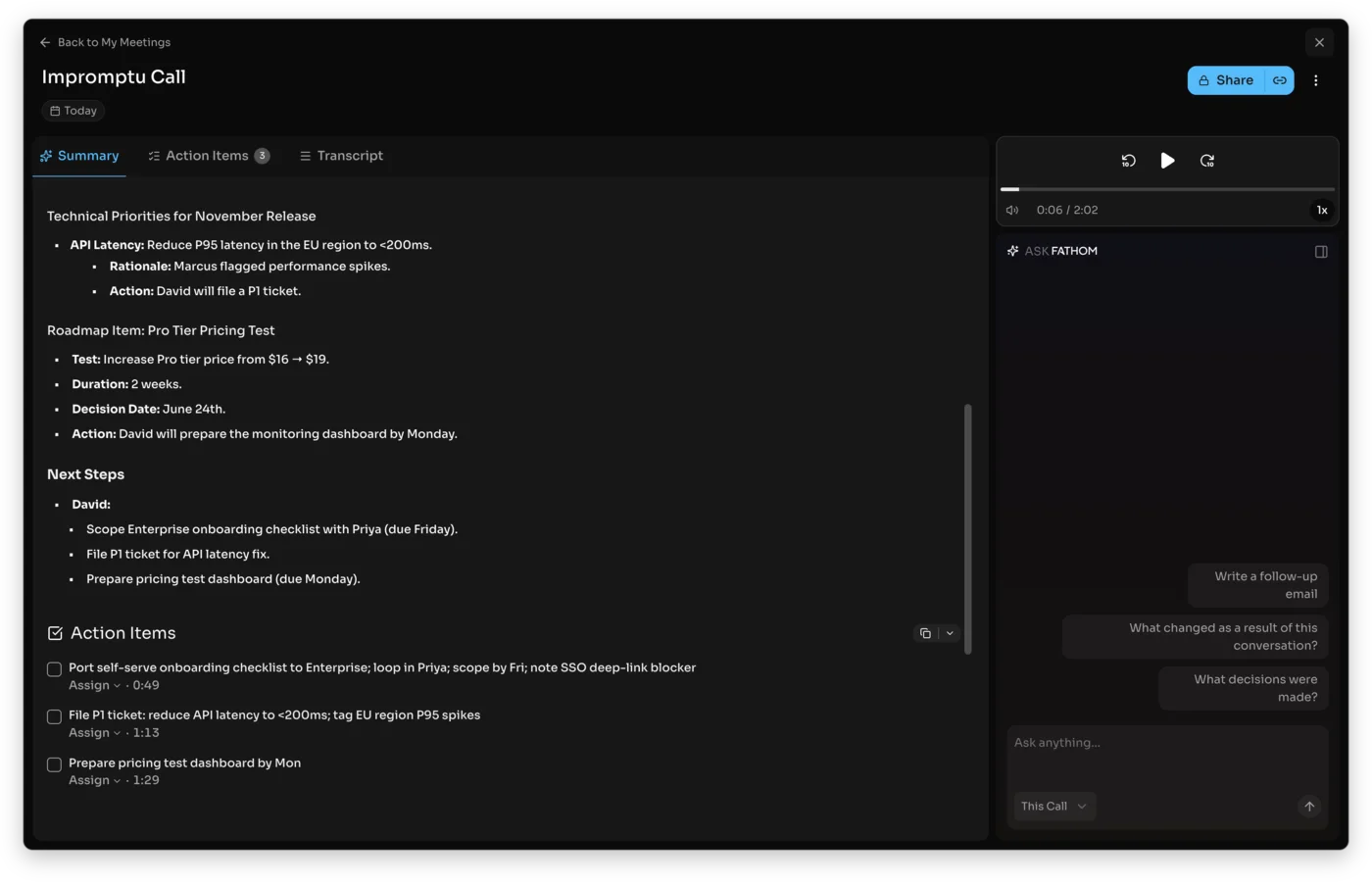
It also simply produced the best output in our test. Fathom’s Enhanced Summary broke the meeting into a purpose, key takeaways, topics, and next steps, with every number and name correct, and its action items came timestamped to the moment in the recording and assignable to a person. Its transcript was the most accurate of the three we ran. It is the highest-rated notetaker on G2, at a near-perfect 5.0 across more than 6,000 reviews as of mid-2026, which is a stronger aggregate than Otter’s.
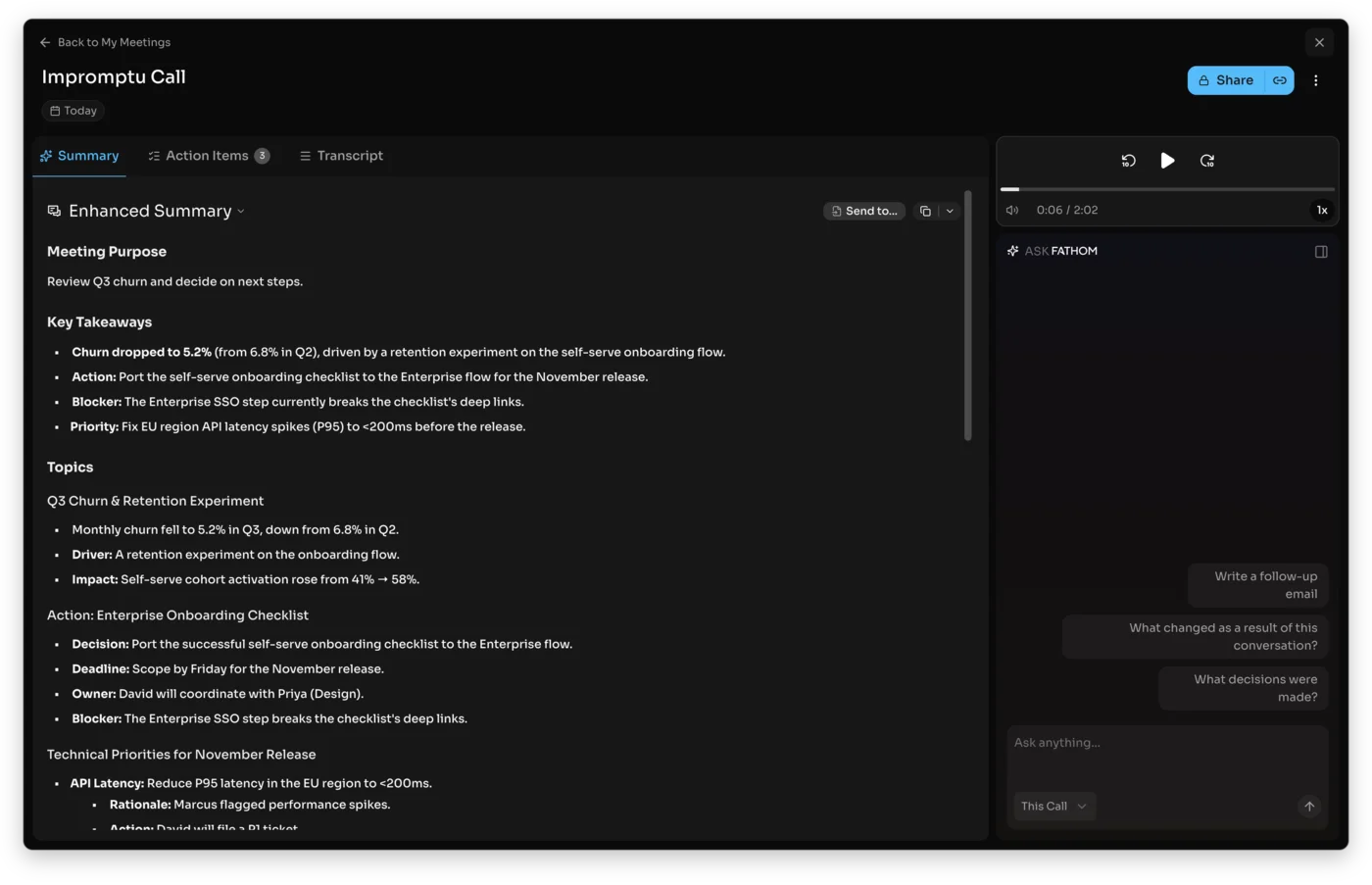
For anyone coming from Otter for the price, this is the headline: the free plan is good enough that a lot of people never pay. When you do upgrade, Premium at $20 a month adds the Ask Fathom assistant and unlimited AI summaries, and the Team and Business plans ($19 and $34 a user) add native CRM sync into HubSpot and Salesforce, which is the feature that makes Fathom the strongest pick for sales teams specifically.
The honest catches: Fathom joins by default as a meeting bot, the same thing some people dislike about Otter’s OtterPilot, and its bot-free mode is still in beta and Mac-only. There is no mobile recording, and the summaries lean a little formal. But if your reason for leaving Otter is the free limits, the missing video, or the cost, Fathom answers all three.
Switching itself is painless. Fathom connects to your calendar the same way Otter does, so it starts capturing on day one with no migration of old notes required, and you can run it alongside Otter for a week to compare before you cancel either. In our test its action items were the most usable part of the output: each one timestamped to the moment it was agreed and assignable to a person, so the summary doubled as a to-do list rather than a block of text to re-read.
Switch to Fathom if you want the most generous free plan, you need to re-watch the video of a call, or you run a sales team that needs notes in the CRM. Read our full Fathom review for the hands-on detail.
2. Granola — the best bot-free alternative

If the reason you are leaving Otter is the bot or the privacy questions, Granola is the cleaner answer than anything else here. Nothing visibly joins your call. It captures your device audio quietly, so on a client or sales call there is no third participant in the list to explain. It also deletes the audio once the transcript is written and lets you opt out of model training, which is a calmer privacy posture than Otter’s default opt-in.
Its signature move is enhancement rather than just transcription. You jot a few rough lines during the call, and when it ends Granola folds in everything it heard and returns a structured summary. In our test it surfaced specific owners and deadlines we never typed but that were spoken aloud, and it turned six terse bullets into the most complete write-up of the three tools.
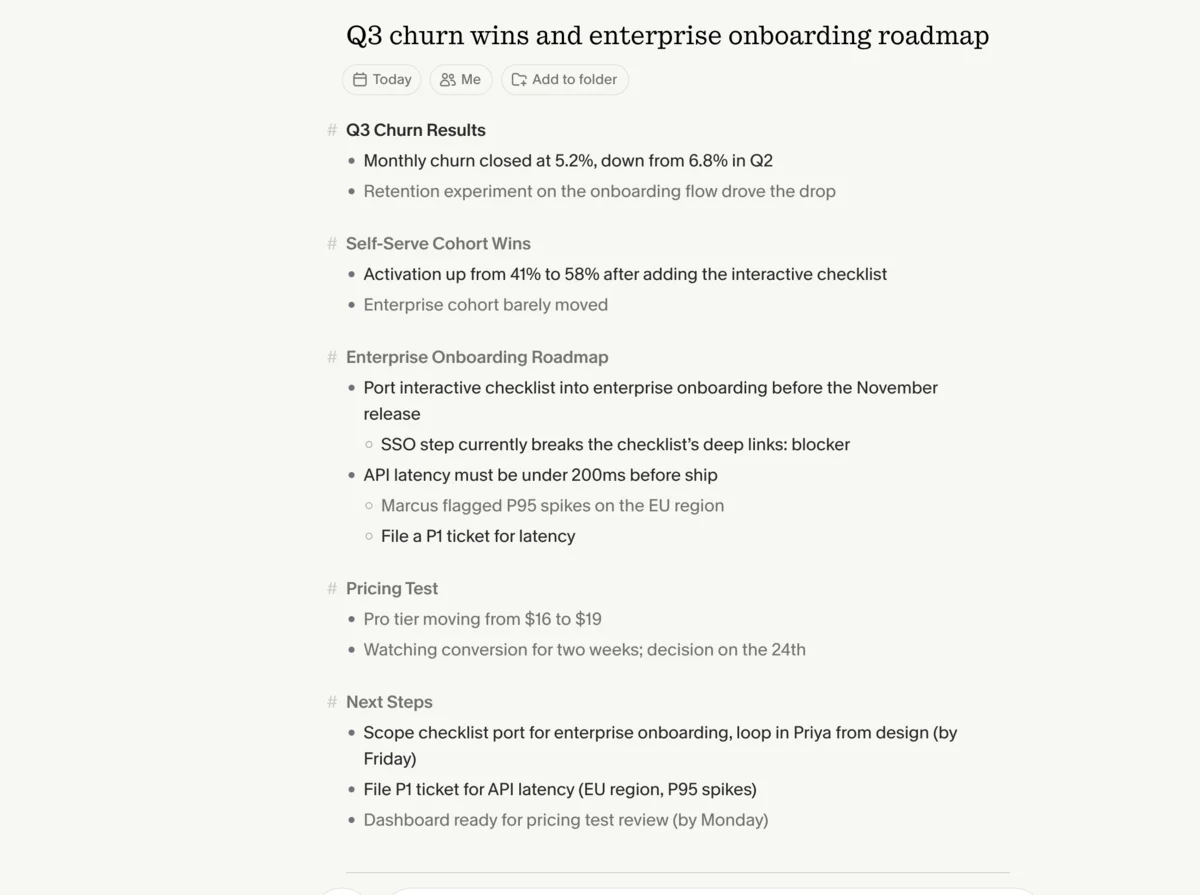
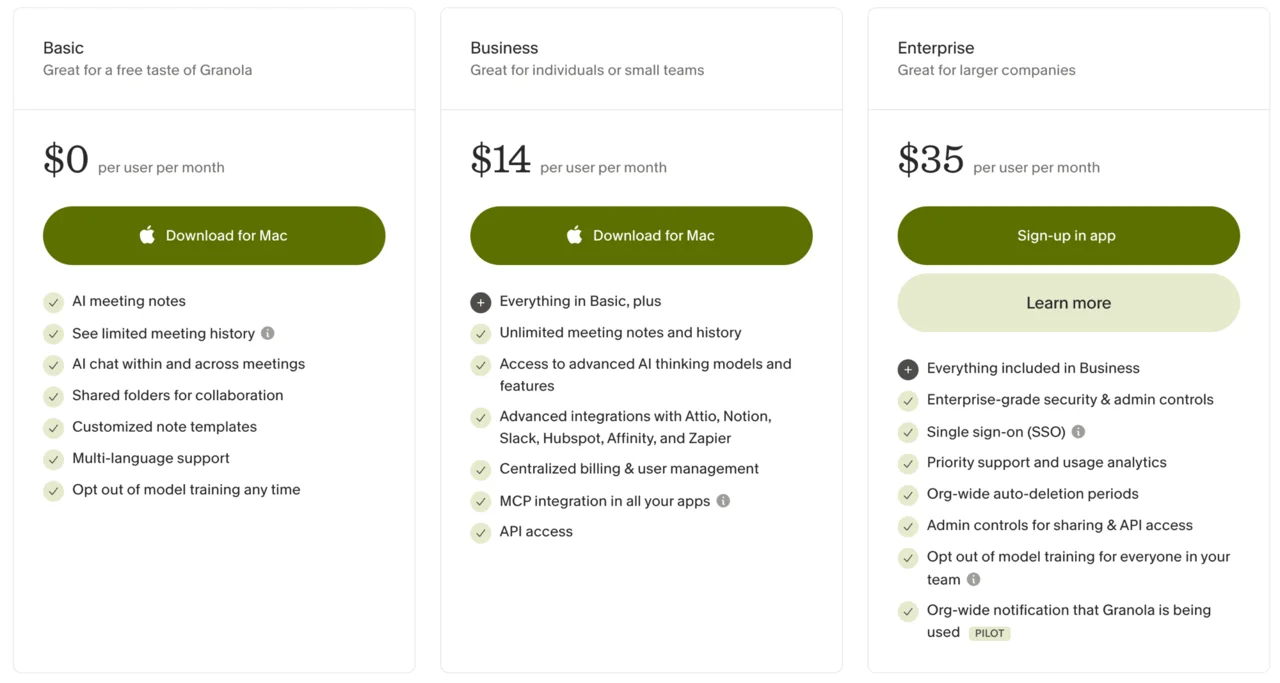
On price it is simple: a free Basic plan, and Business at $14 a user for unlimited meeting history, integrations, and the more capable AI models. The trade-off is that the free plan hides your older notes, so you need the paid plan to keep a searchable archive, and there is no Android or web app, so a team split across platforms is a problem. It also stores no recording, so there is no video to re-watch.
For the specific job of discreet, high-quality notes on external calls, none of that outweighs the discretion. Granola raised at a $1.5 billion valuation in early 2026, led by Index Ventures and Kleiner Perkins, a sign of how much confidence the bot-free approach has drawn, and it is the tool we reach for when a bot would feel intrusive.
The Otter comparison gets interesting on price. Granola’s Business plan is $14 a user, less than half Otter’s $30 Business tier, and it includes the unlimited history and integrations Otter charges more for. The deciding factor is usually the platform gap rather than the price: Otter has a strong mobile app and web access, where Granola runs only on Mac, Windows, and iPhone, so a team on Android or in a browser may have the choice made for them.
Switch to Granola if your calls are client-facing or sensitive, you jot notes during meetings, and you want the quietest possible footprint. Read our full Granola review for the detail.
3. Fireflies — the best alternative for large teams
Fireflies is the pick when the problem is scale: a whole team generating hundreds of calls a month that someone needs to search, analyze, and pipe into a CRM. Where Otter is built around the individual transcript, Fireflies is built around the archive. Its AI search runs across every meeting you have ever recorded, and its conversation-intelligence layer surfaces talk-time ratios, topics, and trends a manager actually wants.
It integrates deeply with the tools big teams live in, including Slack, HubSpot, Salesforce, and Notion, so notes and action items flow to where work happens rather than sitting in a notetaker. It is bot-based, joining calls as a visible participant, and it starts with a free plan that includes roughly 800 transcription minutes a month, with paid tiers from around $10 a user. That makes it a cheaper per-seat option than Otter Business for an organization that mainly needs search and integrations.
Two features carry it for teams. Its AI assistant, AskFred, answers questions across your entire meeting history rather than a single call, so a manager can ask what a customer said about pricing last quarter and get an answer drawn from dozens of meetings. And its analytics turn months of conversations into talk-time, sentiment, and topic trends, which is the kind of reporting Otter never set out to build. Both are aimed at the team archive rather than the individual note.
The reasons it is not our top overall pick: the bot is unavoidable, the interface is busier than Granola’s or Fathom’s, and a solo user or small team will not use most of what they pay for. The free plan’s transcription is capped, so the real value only shows up once you have a team and a CRM to feed. But for the specific job of team-wide meeting intelligence, it is the strongest Otter alternative, and it is the head-to-head the search results most often pair Otter against.
| Fireflies at a glance | |
|---|---|
| Best for | Large-team search + conversation analytics |
| Free plan | Yes, with capped transcription minutes |
| Bot | Yes, joins as a visible participant |
| Paid from | Around $10 a user per month |
| Skip if | You are solo or a small team |
Switch to Fireflies if you are a larger team that needs to search across a big archive of calls and keep your CRM fed automatically. Skip it if you are solo or a small team, where Fathom or Granola will cost less and feel lighter.
4. tl;dv — the best free alternative for Zoom, Meet, and Teams
If Fathom’s free plan ever feels limiting, tl;dv is the other genuinely generous free option, and it leans into a different strength: clipping and sharing. Its free tier records unlimited meetings across Zoom, Google Meet, and Microsoft Teams, and it is built around turning meeting moments into shareable, timestamped clips, which is useful when you want to send one decision or one customer quote to a colleague rather than a whole transcript.
It covers the basics a notetaker needs, with transcription, AI summaries, and integrations into the usual suspects, and it supports a wide set of languages. The clip workflow is the real draw: you scrub to a moment, mark it, and share a short timestamped highlight, which is far more useful for a sales or research team than forwarding a 5,000-word transcript and hoping someone reads it.
Like Fathom and Fireflies, it joins as a bot, so it does not solve the bot objection, and its most generous AI features sit on paid plans, so the free tier is best thought of as unlimited recording plus light AI rather than the full product. Against Fathom specifically it is a close call: pick Fathom for the cleaner summaries and CRM sync, and tl;dv if clip-sharing and language breadth matter more to you.
| tl;dv at a glance | |
|---|---|
| Best for | Free, unlimited recording on Zoom, Meet, Teams |
| Free plan | Yes, unlimited recordings |
| Bot | Yes |
| Standout | Timestamped clip-and-share highlights |
| Skip if | The bot is your reason for leaving Otter |
Switch to tl;dv if you want a free, unlimited recorder for Zoom, Meet, or Teams and you share meeting highlights with a wider team. Skip it if the bot is your reason for leaving Otter, since it joins the same way.
5. Notta — the best alternative for languages and transcription
Notta is the pick if your priority is transcription accuracy across languages rather than a polished meeting-assistant workflow. It supports roughly 100 languages, far more than Otter, which makes it a stronger fit for multilingual teams or for transcribing non-English audio in the first place.
It does the meeting-notetaker basics too, with live transcription, AI summaries, and exports, and it offers a free tier plus paid plans for heavier use. Where it pulls ahead of Otter is breadth: it supports a far wider set of languages and handles uploaded audio and video files without the harsh three-import lifetime cap Otter puts on its free accounts, so if you regularly transcribe recordings you already have, Notta is the more practical choice.
It leans more transcription-first than the summary-and-action-items workflow that Fathom and Granola optimize for, so it is the better choice when the transcript itself is the deliverable, for example for journalists, researchers, podcasters, or anyone producing a written record rather than a meeting recap. The trade-off is that its meeting-assistant polish is a step behind the dedicated notetakers, so if a clean action-item list is what you want, Fathom is still the stronger pick.
| Notta at a glance | |
|---|---|
| Best for | Multilingual transcription and file imports |
| Free plan | Yes, with capped minutes |
| Bot | Optional |
| Standout | Broad language support; no harsh import cap |
| Skip if | Meetings are English-only and you want a recap |
Switch to Notta if you transcribe across languages or you need accurate transcripts as the primary output rather than a summarized recap. Skip it if your meetings are English-only and you mainly want a tidy summary, where Fathom does more with less setup.
6. Avoma — the best alternative for sales and revenue teams
Avoma sits at the analytics-heavy end of the category, aimed at sales and customer-success teams rather than individuals. Beyond transcription and summaries, it scores calls, tracks talk-time and topic trends, and ties conversations to pipeline, which is the kind of revenue-intelligence layer a sales leader weighs against Fathom’s Business plan or a dedicated tool like Gong.
Where Otter gives a sales rep a transcript, Avoma gives a sales manager a system: it tracks how reps talk versus listen, flags whether the agreed next steps were actually set, and rolls individual calls up into pipeline-level reporting. That is a different category of tool from a personal notetaker, and it is the reason a revenue team would weigh it against Fathom’s Business plan or a heavyweight like Gong rather than against Otter directly.
It is more than most individuals need, and it is priced for teams rather than solo users, with a limited free option and paid tiers from around $24 a user for the full analytics. But if you are leaving Otter because it does not give your revenue team coaching and deal insight, Avoma is built for exactly that, and Grain and Sembly, covered below, play in the same space.
| Avoma at a glance | |
|---|---|
| Best for | Sales and CS conversation analytics |
| Free plan | Limited |
| Bot | Yes |
| Paid from | Around $24 a user per month |
| Skip if | You just want clean individual notes |
Switch to Avoma if you run a sales or customer-success team that needs call scoring and pipeline analytics, not just notes. Skip it if you are an individual who just wants clean meeting notes, where it is overkill and overpriced.
Other Otter alternatives worth knowing
The category is crowded, and a few more names come up often enough to place on the map so you know where they fit:
- Grain is another sales-and-customer-success option built around turning meeting moments into video highlights and stories, in the same space as Avoma if you lean more toward sharing clips than deep analytics, with paid plans from around $15 a seat. It is a good fit for a team that coaches off recorded calls and wants polished highlight reels rather than raw transcripts.
- Sembly is an AI meeting assistant with strong task and action-item extraction and good multilingual support, a reasonable Notta-or-Fireflies alternative for teams that want automated meeting minutes. Its “AI insights” lean toward pulling decisions and tasks out of a call automatically, which suits teams that treat the meeting record as a to-do list.
- Descript is not a pure notetaker but it earns a mention: it transcribes and then lets you edit the audio or video by editing the text, which is the right tool if your meetings turn into published content like podcasts or clips. We rated it 4.0 in our Descript review, and it is the only tool here built for production rather than note-taking.
- Google is the free, native option. Google Meet offers live captions and transcription, and the Recorder app transcribes on Pixel phones, so if you mainly need a basic record and already live in Google’s tools, you may not need a separate notetaker at all. The trade-off is that the AI summaries and action items are thinner than a dedicated tool’s, so it is a record more than an assistant.
- Jamie is another bot-free pick, German-built with a strong privacy posture, in the same spirit as Granola, with paid plans in the mid-€20s a month. It is worth a look if you want bot-free and you are in Europe or want a tool built around GDPR from the start, though Granola is the more proven option of the two for most users.
| Also worth knowing | Best for |
|---|---|
| Grain | Sales and CS video highlights and coaching |
| Sembly | Automated minutes and task extraction, multilingual |
| Descript | Turning meetings into published podcasts or clips |
| A free, native record via Meet or the Recorder app | |
| Jamie | Bot-free, German-built, GDPR-first privacy |
We are not ranking these above the six picks because, for the jobs most people leaving Otter actually have, Fathom, Granola, and Fireflies cover them better and we have tested the first two ourselves. But a complete list should show you the whole field, and that is the field.
Otter.ai versus the top alternatives, head to head
If you are weighing Otter directly against the tools people most often compare it to, here is the short version of each matchup.
Otter vs Fathom. This is the one that matters for most people, and Fathom wins it on the points that drive switches. Fathom’s free plan is unlimited where Otter’s stops at 300 minutes, Fathom records replayable video where Otter gates it to the $30 Business plan, and in our test Fathom’s summary and transcript were both cleaner. Otter’s edge is live, in-the-room transcription with speaker labels and a more mature mobile app. If you are leaving Otter for a better free plan or for video, Fathom is the answer.
Otter vs Granola. These two barely compete, because they solve different problems. Otter joins your calls as a visible assistant and builds a searchable transcript archive; Granola joins nothing, captures device audio quietly, and turns your rough notes into a summary. If the bot or the privacy default is your reason for leaving, Granola wins by design. If you need speaker-labeled transcripts and hands-off auto-join, Otter is still the better fit.
Otter vs Fireflies. The matchup the search results pair most often, and it comes down to scale. Otter is the better individual transcriber; Fireflies is the better team brain, with AI search and analytics across your whole call history and deeper CRM integration. Neither is the most generous on free use, so if cost is the driver, Fathom beats them both. Choose Otter for personal transcription and Fireflies for team-wide meeting intelligence.
| Matchup | Winner | Why |
|---|---|---|
| Otter vs Fathom | Fathom | Unlimited free plan, free video, cleaner notes in our test |
| Otter vs Granola | Depends | Granola if the bot or privacy is the issue; Otter for speaker labels + auto-join |
| Otter vs Fireflies | Depends | Otter for solo transcription; Fireflies for team search + analytics |
The throughline is the same one that runs through this whole list: there is no universal winner, only the alternative that fixes your specific reason for leaving.
How to pick your Otter alternative in 30 seconds
The fastest way to choose is to match the alternative to the exact reason you are leaving Otter:
- You left over the stingy free plan → Fathom. Unlimited free recording, transcription, and summaries, with no monthly minute cap.
- You left because the bot is awkward on client calls → Granola. Nothing joins the meeting, and it deletes the audio afterward.
- You left over the privacy lawsuit or default data training → Granola or Jamie, both bot-free with calmer privacy postures.
- You left because video is locked to the $30 plan → Fathom, which records replayable video for free.
- You lead a large team buried in calls → Fireflies for search and analytics, or Avoma if it is a sales team that needs coaching.
- You transcribe across languages → Notta.
- You just want a free, native option → Google Meet transcription or the Recorder app.
If you are still unsure, the lowest-risk move is the same one we would make: start on Fathom’s free plan, since it costs nothing and caps nothing, run a real week of meetings through it, and switch to Granola only if your calls turn out to be the kind where a bot does not belong. For the wider context on how these tools rank against each other, our best AI note taker roundup puts the top picks side by side.
How to switch from Otter without losing your notes
Switching notetakers sounds disruptive, but it rarely is, because the work all happens going forward rather than in a migration. A clean handover looks like this.
First, export anything from Otter you want to keep. Your past transcripts and summaries live in your account, and Otter lets you export them as text, Word, SRT captions, or PDF, so pull down the meetings that still matter before you downgrade or cancel. Nothing you switch to will import that history for you, so this is the one manual step worth doing up front.
Second, connect the new tool and run it in parallel. Fathom, Granola, and the rest connect to your calendar in minutes, so you can run the new notetaker alongside Otter for a week of real meetings and compare the summaries side by side before you commit. There is no risk in overlapping them for a few calls.
Third, cancel once you are confident. Because there is no data lock-in beyond the transcript archive you already exported, you can leave Otter the moment the new tool earns its place, and most people know which way they are going within a handful of meetings.
What testing the top three taught us
One thing testing all three changed in how we think about the switch: transcription quality is not where these tools separate. They all get the gist of a meeting. What separates them is everything around the transcript: whether a bot announces itself on the call, how clean and structured the summary is, what the free plan actually allows once you read the limits, the privacy defaults, and where the notes end up afterward.
Otter is not weak on any single one of those. It is just that for each, a rival does it a little better, and the rival that matches your own reason for leaving is the one to choose. It is a more reassuring conclusion than it sounds, because it means there is no wrong tool on this list, only a wrong match. Pick on the workflow that fits your week, not on a headline accuracy figure, and you will land on the right Otter alternative the first time.
Final word
Otter.ai is not a tool you have to escape, but it is one a lot of people outgrow, and almost every reason for leaving now has a clean answer. The price and the free limits are what Fathom undercuts, handing you unlimited recording and video for nothing. The bot and the privacy defaults are exactly what Granola removes, capturing audio quietly and deleting it after. Scale, the thing a personal notetaker was never built to handle, is where Fireflies takes over. The category has matured to the point where you no longer have to settle for the thing pushing you off Otter.
The one switch that fits the most people is Fathom: an unlimited free plan, video, and the cleanest notes we tested, which together fix the two complaints we hear most about Otter. Start there, and read our Fathom, Granola, and Otter reviews for the detail behind each verdict.
Frequently asked questions
What is the best alternative to Otter.ai?
For most people it is Fathom. We ran the same meeting through Otter, Fathom, and Granola, and Fathom produced the cleanest summary and the most accurate transcript while costing nothing on a genuinely unlimited free plan, which fixes Otter's two biggest weaknesses at once: the stingy free tier and the lack of video. If your calls are with clients and a recording bot feels intrusive, Granola is the better switch, because it is bot-free and turns your rough notes into a full summary. And if you are a large team that needs to search across hundreds of past calls, Fireflies pulls ahead on search and analytics. There is no single winner; the right Otter alternative depends on whether your priority is a free plan, a quiet bot-free footprint, or team-wide search.
Is there a free alternative to Otter.ai?
Yes, and it is more generous than Otter's own free plan. Fathom's free tier records, transcribes, and summarizes unlimited meetings with no monthly minute cap, where Otter's free plan stops you at 300 minutes a month with a 30-minute limit per conversation and just three lifetime file imports. In our hands-on test Fathom's free output was also the strongest of any tool we tried, with a clean structured summary and timestamped action items. tl;dv is another genuinely free option with unlimited recordings across Zoom, Google Meet, and Microsoft Teams, and Granola has a free Basic plan too, though it hides your older meeting history until you upgrade. If free is your main reason for leaving Otter, start with Fathom.
What is a good Otter.ai alternative without a bot joining the call?
Granola is the bot-free pick by design. It captures your device audio so nothing appears in the participant list, which is ideal for client and sales calls where a visible recorder is awkward or against policy. Beyond hiding the bot, it has the calmest privacy posture in the group: it deletes the audio once the transcript is written and lets you opt out of AI training, where Otter trains on your data by default. Fathom now offers a bot-free capture mode too, though it is still in beta on Mac and on the paid plan, so it is a strong second option if you want bot-free plus video recording. Jamie is a third bot-free choice, German-built with a GDPR-first approach, if you are in Europe. For most people switching off Otter specifically to lose the bot, Granola is the cleanest answer.
Why are people leaving Otter.ai?
Three reasons come up most. The free plan is restrictive, capping you at 300 minutes a month, 30 minutes per conversation, and three lifetime imports. Privacy is the second: a 2025 class-action (Brewer v. Otter.ai) challenges how it records people, and Otter trains its AI on your data by default unless you opt out. Third, the price-to-feature math frustrates people, since video replay and unlimited transcription sit behind the $30 Business plan while rivals include more for free.
What is the best Otter.ai alternative for large teams?
Fireflies, based on its documentation and public ratings rather than our own hands-on test. It is built around team-wide search and conversation analytics, with deep integrations into Slack, HubSpot, and Salesforce, so a whole organization can search across hundreds of past calls and surface trends a manager can act on. Its AI assistant, AskFred, answers questions across your entire meeting history rather than a single call. It is bot-based and starts free, with paid plans from around $10 a user, which is cheaper per seat than Otter's $30 Business tier for a team that mainly needs search and integrations. For a solo user or a small team, the bot-free Granola or the unlimited-free Fathom are better starting points, but at the scale of a whole sales or success org, Fireflies' search and analytics pull ahead.
Is Otter.ai or Fireflies better?
They win at different jobs, so the answer depends on whether you are an individual or a team. Otter is stronger for live, in-the-room transcription with speaker labels, and it has a more mature mobile app, which makes it the better personal notetaker. Fireflies is stronger for a large team that needs to search across a big archive of calls, analyze talk-time and topics, and pipe notes into a CRM automatically. Neither is the most generous on free use, so if cost or a free plan is your priority, Fathom beats both with unlimited free recording. If you are weighing Otter against Fireflies specifically, choose Otter for personal transcription and Fireflies for team-wide meeting intelligence, and look at Fathom first if you have not committed to either. As a rule of thumb, Fireflies only earns its price once you have a team of several people generating calls every week; below that, Otter or Fathom is the simpler and cheaper choice.